Malcolm X and the Transforming Power of Hajj
Malcolm X went to Hajj in the year 1964. He went as an ardent believer in Black Nationalism and returned to America a changed man.
He had a life-transforming experience. Prior to Hajj, he divided humanity into black and white and saw no possibility of uniting them. His experience of Hajj convinced him otherwise.
Hajj made Malcolm X a wholly transformed person – as if he were reborn. Afterwards he not only believed in the universal brotherhood of all of mankind; but became committed to work for the ideals he imbibed from Hajj.
The question is: How did this happen? How do we replicate this experience in order to attain the maximum benefits of Hajj and then continue to live by them?
 Read Also: How Hajj Can Be a Model for Life
Transformed by Hajj
First of all, Malcolm X was open and receptive to the experiences and lessons of Hajj: He explained himself thus:
“You may be shocked by these words coming from me. However, on this pilgrimage, what I have seen, and experienced, has forced me to rearrange much of my thought-patterns previously held, and to toss aside some of my previous conclusions.”
And of his life-transformation he says:
“Never have I witnessed such sincere hospitality and overwhelming spirit of true brotherhood as is practiced by people of all colors and races here in this ancient Holy Land, the home of Abraham, Muhammad and all the other Prophets of the Holy Scriptures.
…there were tens of thousands of pilgrims, from all over the world. They were of all colors, from blue-eyed blondes to black-skinned Africans. But we were all participating in the same ritual, displaying a spirit of unity and brotherhood that my experiences in America had led me to believe never could exist between the white and non-white.”
He had this message to share with America:
“America needs to understand Islam, because this is the one religion that erases from its society the race problem. Throughout my travels in the Muslim world, I have met, talked to, and even eaten with people who in America would have been considered white – but the white attitude was removed from their minds by the religion of Islam. I have never before seen sincere and true brotherhood practiced by all colors together, irrespective of their color.”
Malcolm-X was able to attain this because he was willing to change his earlier beliefs and embrace the truth. The lessons of Hajj taught him vividly the message of peace, and universal brotherhood under the lordship of one God.
It deepened his connection with God; it inspired in him a true spirit of trust and sacrifice; and above all, he experienced the deep meaning of Islam (surrender) and Iman (faith in God).
What to learn from Hajj
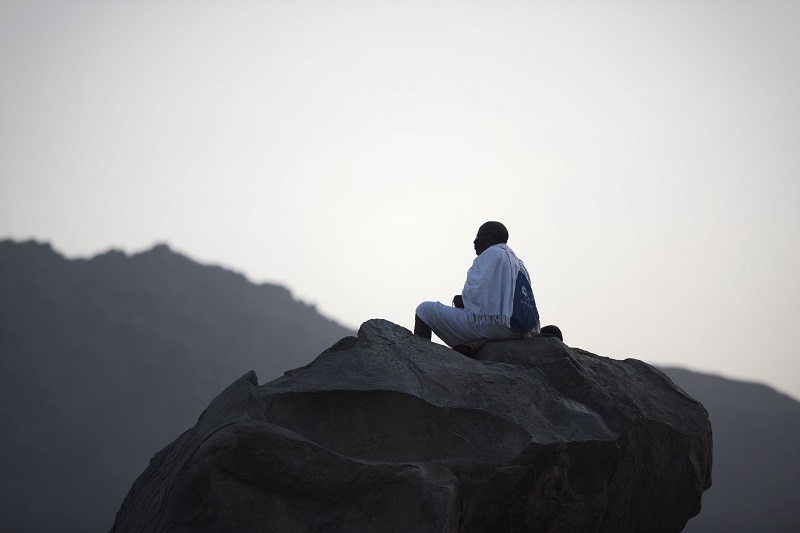
Therefore, in order for us to replicate the same experience, we must be willing to internalize the lessons of Hajj. Here are some tips to maintain the fragrance of Hajj:
1. Hajj deepens our awareness of our connection with Allah, our Creator and Lord. The Prophet (peace and blessings be upon him) taught us that all the rites of Hajj and, indeed, all acts of worship are instituted to establish the remembrance of Allah.
So, we ought to condition ourselves to make dhikr as second nature. This is possible only when we emulate the example of the beloved Prophet of Allah in his daily supplications and practice of dhikr.
2. Together with dhikr comes contemplation of death. Pilgrims are reminded of their final journey when they don the ihram garb – much like the shroud we are buried in. There is no better way to cure the rust accumulated in our heart than through dhikr and remembrance of death.
Brotherhood and Universal Citizenship
3. The lessons of brotherhood that we learn from Hajj must be translated into daily practice: when we come to the mosque, we need to set aside our tribal mindset, and be willing to embrace all as brothers in faith and humanity. The Prophet said,
“By Allah, you will not enter Paradise until you believe and you will not believe until you love one another. Shall I guide you to something to do to that will make you love one another? Spread the greetings of peace (salam) among yourselves.” (Muslim).
So the next time you meet anyone in the mosque, share this spirit of love through salaam from your heart.
Read Also: What Quran Says About Hajj Blessings
4. Salah in congregation is intended not only to bring us to the presence of Allah; rather, like Hajj itself, it brings believers of all shapes and colors to stand shoulder to shoulder like brothers. So being diligent in conscious performance of salah should be a priority for us all.
5. Since the Qur’an is the life-giving message, source of healing and mercy, we should begin and end each day with this enlivening message.
Reading the Qur’an is much more than chanting it; rather, it is receptiveness to receiving the message in one’s heart, for no spiritual awakening is possible without opening the heart. There is nothing like the Qur’an in achieving this goal – as long as we are open to it. The Qur’an refers to it as sharah as-sadr (broadening of the heart/mind).
6. Hajj is meant to make us universal citizens and train us to live in peace and harmony with everyone. Hence the lessons of interacting with others and living the lessons of brotherhood, forgiveness, tolerance, compassion, and generosity should be practiced within the community. We have ample opportunities to do this in our mosques, schools, offices, hospitals, and neighborhood.
Self-discipline
7. As the world is full of temptations, Hajj reminds us of the need to be vigilant about the snares and temptations of Satan; there is no way of overcoming them except through constancy in dhikr, contemplation of death and becoming occupied ourselves with God’s work. Imam Shafi’i said,
“If you don’t occupy yourself with good works, your carnal soul will keep you occupied with sins (i.e. Satan’s work).”
Opportunities for good works are all around us.
8. Finally, constancy in istighfaar (seeking Allah’s forgiveness) will keep us on track. One of the sages said,
“The best people to appear before Allah on the Day of Resurrection are those whose register is filled with istighfaar.”
Allah calls us to flee to Him. Through istighfaar we flee to Allah from our own failings, evil inclinations and sins.
I pray to Allah to forgive us all our sins: major and minor, first and last, secret and open, those which we know of and those which we have no knowledge of – Ameen.
The post Malcolm X and the Transforming Power of Hajj appeared first on About Islam.
source https://aboutislam.net/shariah/refine-your-heart/born-again/malcolm-x-transforming-power-hajj/


Comments
Post a Comment