Muslim’s Novel Shortlisted for Australia’s Literary Award
A Muslim teacher from Sydney has written a new novel to bridge the gap for young readers, a book which has been nominated for one of Australia’s most prestigious literary awards.
“I wrote the book for the young boys and girls to feel like they are worth something, that they matter. That even though life can go by, and they think they’re not represented or that people don’t care about them, that there’s someone always keeping an eye out for them,” Rawah Arja told SBS News.
“I wanted to give them a safe space to say ‘hey, you know, us Arab Muslims aren’t always the bad guys.’ And I wanted for them to read a story from someone who looked and sounded like them.”
 Read Also: These Women Work for Better Depiction of Muslims in School Books
The Lebanese-Muslim teacher was born and raised in Punchbowl in Sydney’s south-west. She spent ten years in classrooms across Western Sydney trying to encourage students to pick up a book and read, the effort which has not been always successful.
Growing up in Sydney, Arja shared the same sentiments as the students she taught when she was their age as there were no books she can relate to.
“I always thought literature was only for white people, it was all I was accustomed to. That’s all a high school ever gave me to read. I thought that was not my world. I can’t be a part of it. I have to be at the back of the line,” she said.
“I always thought reading was boring, but it’s not that. It was just that I couldn’t find a book for me.”
-
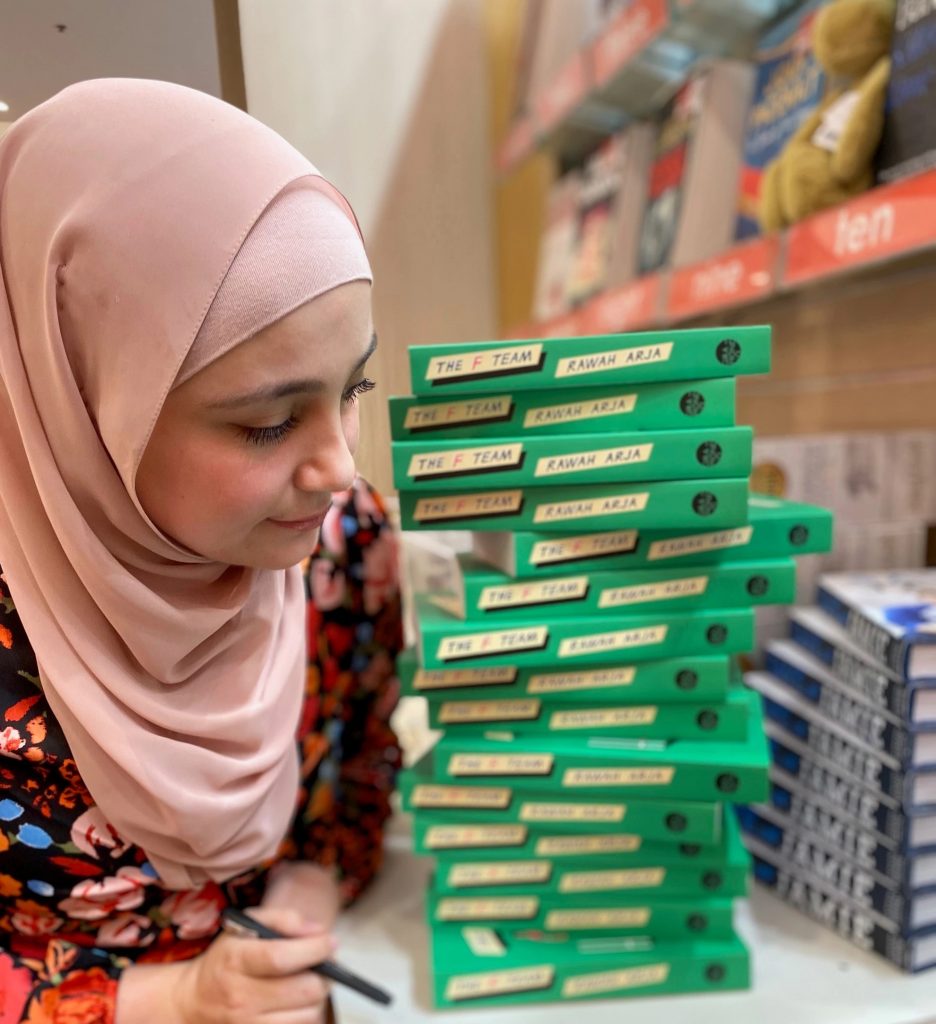
Growing up, Rawah Arja didn’t think reading was for her – until she found stories that shared her experiences. Source: Supplied/Rawah Arja
Awards Shortlist

Her debut novel, ‘The F Team’, has now been shortlisted for various prestigious Australian literary prizes, including the 2021 Prime Minister’s Literary Awards announced last month, in the young adult literature category.
The winners of the Prime Minister’s Literary Awards will be announced in December.
The judging panel said Arja’s characters “humanize people from marginalized communities who are not widely represented in young adult literature yet make up an important part of the cultural landscape of modern Australia”.
Hoping to win, Arja believes the accolade can inspire other young culturally and linguistically diverse people to follow in her footsteps.
“The reason why I care about being acknowledged is just so any person of color can look and say, ‘Oh, okay, I can actually be nominated, because, she’s been nominated before. That means it’s not such a distant dream,’” she said.
In recent years, Muslim writers have published several books to support diversity and counter racism.
In July 2019, Samira Hamana, a certified life coach from Edmonton, published her first children’s book to help children and their parents counter bullying.
Also in the same year, Hudda Ibrahim from St Cloud, Minnesota, wrote a book to empower young Muslim girls and normalize the hijab.
The post Muslim’s Novel Shortlisted for Australia’s Literary Award appeared first on About Islam.
source https://aboutislam.net/muslim-issues/australia/muslims-novel-shortlisted-for-australias-literary-award/


Comments
Post a Comment