Being Thankful to Allah…Why It Matters
Each day in our salah, we repeatedly make one humble request to Allah, our Creator and Sustainer:
{Guide us the Straight Way.} (Al-Fatihah 1:4)
It is only by seeking and staying on the Straight Way, that we can ever hope to attain true salvation and success.
What then must we do to ensure that Allah accepts and grants our Prayer? The Qur’an explains:
{Whosoever holds on to Allah, he has already been guided onto a Straight Way.} (Aal `Imran 3:101)
What exactly is i`tisambillah or ‘holding onto Allah’?
How do we develop a close attachment to and a close relationship with Allah?
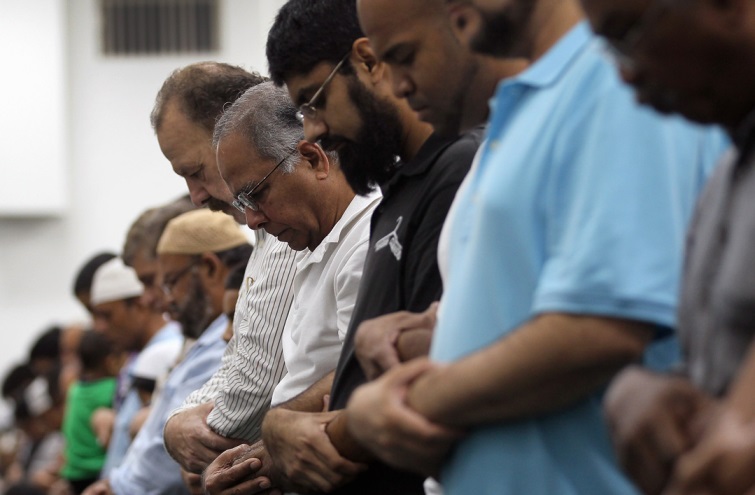
Let us explore the answers to these questions by reflecting upon the characteristics needed to ‘hold onto Allah’ and thus be among those who are shown the Sirat al-Mustaqim or the Straight Way.
Gratefulness
The first characteristic is being ever grateful and thankful to Allah for everything that you possess including your wealth, health, status, intellectual abilities and life.
You should recognize that your very existence and your continuing sustenance are dependent on Allah. Whatever praise is due, therefore, it is due to Him alone, for nobody has the power or the resources to give you anything except by His will. His bounties and blessings are countless. Allah says:
{Is, then, He who creates comparable to any that cannot create? Will you not, then, take heed?
And should you try to count Allah’s blessings, you could never compute them. Allah is, indeed, All forgiving, All compassionate; and Allah knows all that you keep secret as well as all that you bring into the open.} (An-Nahl 16:17-19)
That is what Prophet Ibrahim (peace be upon him) stated, as narrated in the Qur’an:

{It is He who has created me, and so it is He who guides me;
it is He who gives me to eat and drink, and whenever I am sick it is He who heals me;
and it is He who makes me die and then will bring me to life.
And upon Him, l pin my hope that He would forgive my sins on the Day of Judgment.} (Ash-Shu`araa’ 26:77-82)
In many places in the Qur’an, Allah compares the terms shukr and kufr. (al-Baqara 2:152, Luqman 31: 12). Iman implies shukr or gratefulness as opposed to kufr or ungratefulness.
An unbeliever is ungrateful to the Being who has given him everything, whereas a mu’min or a believer is one who is ever thankful for all that Allah has given him, for he recognizes that his Lord is Merciful and Loving. (Hud 11:90).
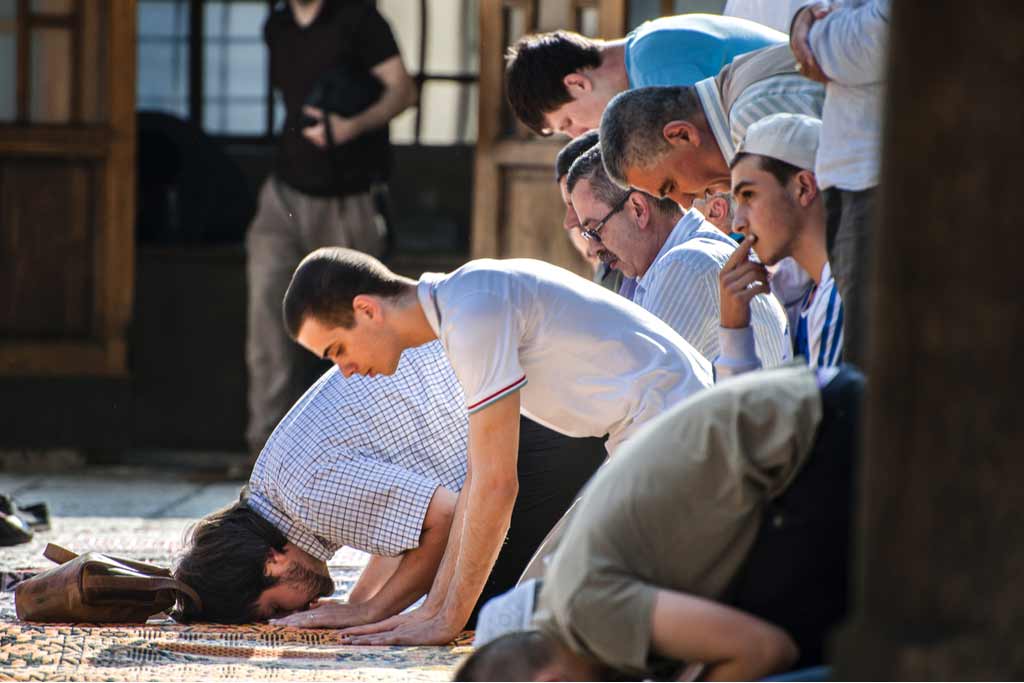
Iman, therefore, requires due praise and thanks to Allah. If you are ungrateful, Allah is unaffected. If you become grateful, then you have taken the first step towards becoming a true believer.
In every moment and in every situation we see our Creator and Sustainer actively involved. He has not retired from this world. He is on His throne creating, distributing and administering everything.
Allah the Almighty governs and sustains all in the Universe. Not even a leaf can fall without His knowledge, His permission and His command. The Qur’an declares:
{He knows all that enters the earth and all that emerges therefrom, and that which comes down from the sky and all that ascends therein; and He is with you wherever you may be.} (Al-Hadid 57: 4)
Everything that happens to us – even events that we may consider to be personal afflictions or natural disasters- are from Him. So even in times of calamity and distress, there will be some good for us, provided we respond appropriately. The Prophet said:
“How wonderful is the case of a believer! There is good for him in whatever happens to him -and none, apart from him, enjoys this [blessing.] If he receives some bounty, he is grateful to Allah and this bounty brings good to him. And if some adversity befalls him, he is patient, and this affliction, too, brings good to him.” (Muslim)
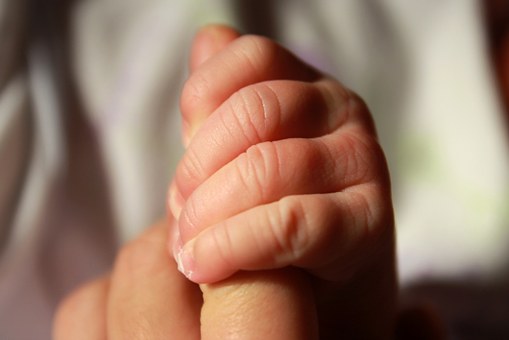
Look again at the Qur’an, you will see that the very first introduction to Allah is Ar-Rahman Ar-Rahim. (Al-Fatihah 1:1) Allah Himself is saying that He is the Most Merciful, He is the Most Compassionate. He shows and gives mercy to all, even those who continue to be ungrateful and rebellious towards Him:
{Allah is full of bounty to the people, but most people do not give thanks.} (Al-Baqarah 2: 243)
Reflect upon your own life and you will find innumerable occasions when Allah’s ‘hand’ has been holding you and helping you. So often, we subconsciously use the expression ‘thank God for this and that’, without realizing the full implications of our words.
The Qur’an even reminded the Prophet Muhammad (peace and blessings be upon him) that in his early life, Allah’s ‘hand’ was holding him and guiding him:
{Did He not find you an orphan and gave you shelter [and care]? And He found you wandering and He gave you guidance. And He found you in need and made you independent. Therefore, treat not the orphan with harshness, nor repulse him who asks.} (Ad-Duha 93: 6-10)
This exhortation is not only for the Prophet but for all people. From the moment that we open our eyes in this world until the moment our souls leave our bodies, and even beyond, Allah’s mercy, compassion and protection remain with us.
Continuously remind yourself then that your entire existence is dependent on Him. He is your Lord and Sustainer. He is nourishing and sustaining all that exists.
From morning until evening, your tongue must be moist with continuous praise of Allah. In return, Allah has promised increased rahmah or mercy for you:
{If you are grateful, I will surely give you more and more.} (Ibrahim 14:7)
This is the cornerstone of your faith and the Islamic way of life. If you learn this first lesson, you will begin the process of ‘holding onto Allah’. And whoever is grateful, he is only grateful for the benefit of his own self (Luqman 31:12), for surely if it was not for the grace of God on you and His mercy, you would have been among the losers. (Al-Baqarah 2:64).
References
Take with some modifications from the author’s In the Early Hours.
The post Being Thankful to Allah…Why It Matters appeared first on About Islam.
source https://aboutislam.net/shariah/refine-your-heart/advice/thankful-allah-why-matters/


Comments
Post a Comment