How My Spiritual Journey to Islam Began
“My soul is from elsewhere. I am sure of that. And I intend to end up there”- Rumi.

This quote from the Islamic scholar and world–renowned poet, sums up my understanding of spirituality. I can tell you the moment I converted to Islam and became a Muslim. I can tell you it was easy. Two short sentences were all it took: God is One. Prophet Muhammad is His messenger.
And certainly, I understood those sentences. They spoke to my very nature. But to say that converting to Islam is simply saying a few sentences would be like saying you know someone simply because you know their first and last name. Becoming a Muslim, and living Islam is a spiritual journey that goes well beyond words. It is tasting a sweetness that reaches down into your soul.
I cannot say the exact moment that my spiritual conversion to Islam began. I did not always consciously understand that I was more than flesh, blood, hunger, and thirst. Understanding the concept that I am more than just a physical existence was a journey in itself. And I guess you could say that understanding the nature of my being is where my spiritual journey to Islam began.
Beyond the Physical

I remember a moment in my young adult life where I found myself in desperate need of something. I felt a gnawing a bit like hunger only more intense. I felt a malaise like a flu only with inexplicable symptoms.
I couldn’t stand it. But I knew I had to somehow fix it. I got my keys, jumped into the car, and drove as if on autopilot. I had no thought for where I was going or why I was going there. And when I realized where I was, I was in a parking lot walking toward a big box store.
As I got closer to this store that sold most things under the sun, I began to think about what I needed to buy to fix this intangible, empty, and sick feeling. I realized there was nothing in the entire building that could help me. A sinking feeling came over me because I knew, in a very vague sense, that what I sought could not be bought anywhere on this earth for any amount of money.
I didn’t know it at the time, but I was feeling my soul. I was feeling that part of me that is from elsewhere. I was feeling that part of me that cannot be filled with anything in this world.
Perspective

It took a few more years for me to learn about, understand, and accept Islam into my life. Looking back now, I realize how confused I was by life, my purpose here, and what that aching, hungry, and sick feeling in me was longing for.
I realize now how confused I was because it took me years to understand the simplest and most natural of concepts: we come from elsewhere. We come from the one and only God and Creator.
And our purpose is to follow the path of God’s messengers—returning to God; having known, trusted, and loved Him.
Saying the testimony of faith that made me officially Muslim was a moment that I can delineate a distinct before and after. Before my life felt dark, aimless, confusing, as if I had always lived in a storm and had not even realized it. After my life felt light, simple, directional, purposeful and I had not even realized it could be so.
I didn’t realize it at the time, but that lifting of the clouds and confusion that hung over my life prior to Islam was simply getting some directionality for my soul.
Trust
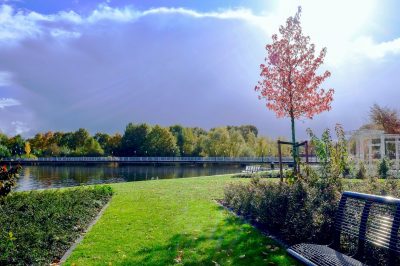
Islam is often called the deen. Deen means path. And Islam—or willing surrender to God’s will—is the soul’s path back to God. But being on a path means that you must work to travel further. And calling oneself a Muslim—or one who willingly surrenders to God’s will—does not mean that one is actually doing this.
I was well into my life as a Muslim when I realized that growing in spirituality or strengthening my soul does not come with a simple statement of faith. It is a continuous spiritual exercise. Just like muscles don’t just appear because we have a gym membership, they must be worked for.
I cannot recall the exact day, but it was in my second or third Ramadan in the middle of the most difficult day of fasting I had ever experienced. I was thirsty, excruciatingly hungry, tired, and I had almost had enough.
I could not understand why it was so hard. I was on the verge of anger with God. But at that moment a thought entered my mind: if God had prescribed it for me, that means I am capable of it. I realized that I had sold myself short and talked myself out of accomplishing spiritual growth and instead I had focused on the negative, the shallow, and physical.
So, I made the decision to let go. Let go of the physical pain, let go of the worry about if I could make it, and just accept that God knows I can. After that, I have never experienced the same difficulty in fasting. But more than that, I have learned how to trust God no matter what is in my path.
Spiritual Fulfillment

Spiritual fulfillment came when I let go, when I truly surrendered to God not just in words or when it was easy. But at the moment I thought I couldn’t take any more and I surrendered to God in action. It came and comes as a burst of joy, peace, and hope as my soul is nourished by its Creator.
It was and is a torrent of strength knowing that my Creator made me stronger than I give myself credit for. It was and is more than that and beyond my descriptive powers. All I know is that my soul feels less and less empty, gnawing, homesick as I get closer and closer to God.
My spiritual conversion to Islam took many years and I honestly still feel as if I will always be learning how to better care for my soul, my true existence.
I will as long as I am alive and God wills it, be on this path, this deen, because my soul is from elsewhere. I am sure of that.
Now that I have found the path, I intend to end up there.
(From Reading Islam archive)
The post How My Spiritual Journey to Islam Began appeared first on About Islam.
source https://aboutislam.net/spirituality/spiritual-journey-islam-began/


Comments
Post a Comment