But She Must Be a Virgin!
What Will He Think of Her?
Tamika’s heart pounded, and sadness overwhelmed her. Part of her wanted to marry him, but she couldn’t.
There was so much he didn’t know about her, and she doubted he would want to marry her after he found out.
Tamika hung up the phone, feeling as if she had given up a piece of her heart.
A lump developed in her throat, and she wondered if she had made a mistake in telling him no.
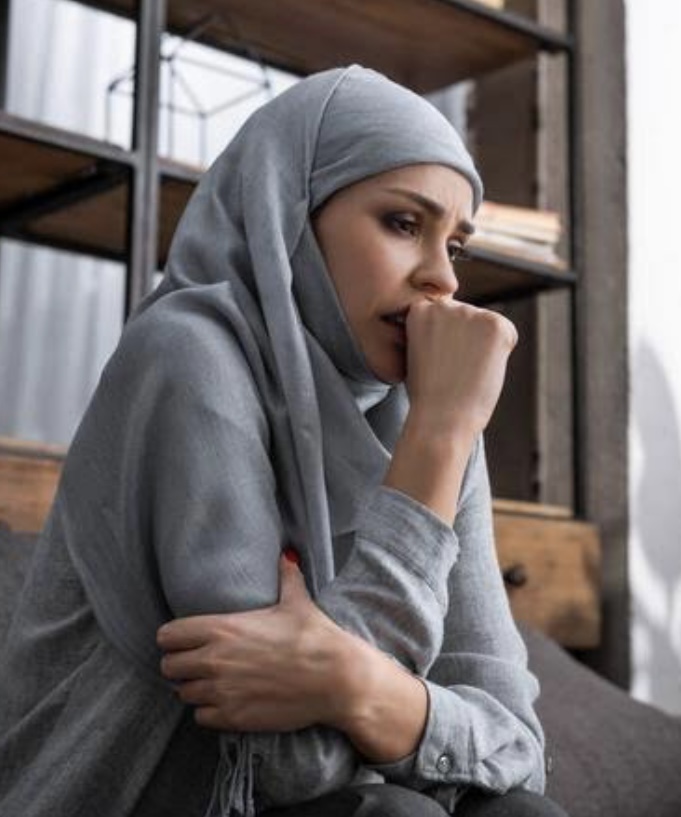
There was a part of Tamika that resented this Muslim man who wanted to marry her. Tamika knew her feelings were unjustly critical.
But he’d spoken against college students having boyfriends and girlfriends, and his words opened up wounds that she had hoped to heal.
Tamika had made many mistakes before becoming Muslim.
Caught up in the social life of high school, she hadn’t seen herself drowning.
Parties and clubs were regular scenes for her, and they were always filled with alcohol, marijuana, and good-looking men.
She dressed the part, played the part, and eventually became the part. She partied, drank, and did whatever everyone else did.
Later, when Tamika saw the Muslim man again, she let him know she changed her mind. She would marry him after all.
And finally, as a cruel climax to her degenerate life, she became involved with a young man who was known for crushing hearts.
It was a harsh introduction to the world of men. He would be the first and last boyfriend she had.
Scared by the experience, she turned to the church and vowed to give her life to God.
Now, as a Muslim, she wanted to forget about her past sins.
“What were you afraid of?” he asked.
Tamika grew silent, unsure how to respond. She had pushed her insecurity about her past to the back of her mind, and her healing was in choosing to forget.
It was easier to pretend it had never happened than to risk that her confession would sour what they had found in each other.
But now she felt cornered, and as her mind raced in search of a safe response, she realized honesty was her only option.
She tried to gather her thoughts. “You,” she said finally.
He wrinkled his forehead in confusion. “What do you mean?”
“I wasn’t always Muslim,” she said, letting the implications of her words sink in.
With an empathetic sigh, he shook his head in self-reproach. “I’m no angel, Tamika,” he said, “and I didn’t expect you to be one.”
“Tamika.” He drew in a deep breath and exhaled slowly. He couldn’t look at her. He bit his lower lip and stared distantly in deep thought. “I was always Muslim,” he said finally, confessing his sins as their eyes met, “so I have no excuse.”
“I was afraid you’d judge me for it,” she said.
Is Being a Virgin Really That Important?
In the excerpt from my novel A Voice, Tamika is reluctant to agree to marry a Muslim who has proposed to her because she’s afraid that he will judge her for a past sin.
She is no longer a virgin, and she thinks this will be a “deal breaker” for him.
However, to her surprise, she learns that although he himself grew up in a Muslim family, he is not a virgin himself.
It makes no difference to him whether or not Tamika fell into sin in her past life.
In fact, when he asked to marry her, he had never assumed she was a virgin in the first place.
In any case, it is apparent that Tamika’s regret for her past sin is affecting her sense of self-worth as a Muslim, even though her sin occurred before she even accepted Islam.
And Tamika is not alone. Many Muslim women, including those who grew up in Muslim families, are facing a similar struggle.
They fell into sin and lost their virginity. But later they felt bad, gave up the sin, and repented to Allah. Yet they still despair over their wrongs.
Allah (SWT) says,
“Say, O My slaves who have wronged their souls! Despair not of the mercy of Allah.
Verily, Allah forgives all sins.
Truly, He is Oft-Forgiving, Most Merciful.” (Qur’an, 39:53)
However, humans are not so merciful.
Hypocrisy and Double Standards of Muslims
It’s a scenario that can make any Muslim woman upset.
A Muslim man lives a life of sin in his youth, and he might even have a girlfriend that even his parents and other Muslims know about.
But they look the other way. He is a boy, after all, they might say.
Then, when it’s time to get married, this man demands to marry only a virgin.

If he finds out that the woman he wants to marry had a single “inappropriate relationship” with a man, he refuses to even consider her for marriage.
Furthermore, even if the woman never committed zina (fornication or adultery), the man will likely refuse to marry her if she is divorced.
His refusal will likely be even more adamant if he learns that she had children from her previous husband.
This hypocritical attitude is sometimes prevalent even among men who are themselves divorced with children.
The post But She Must Be a Virgin! appeared first on About Islam.
source https://aboutislam.net/family-life/youth-4-the-future/but-she-must-be-a-virgin/


Comments
Post a Comment