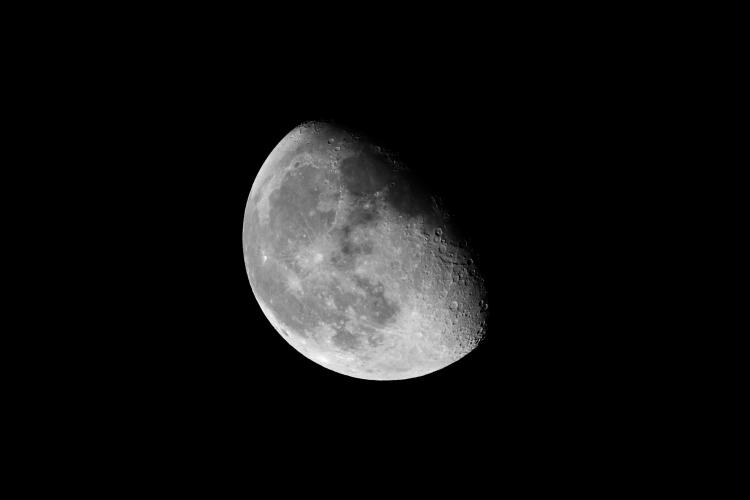
Scientific Pros of Lunar Calendar

The Islamic calendar, based purely on lunar cycles, was first introduced in 638 C.E. by the close Companion of the Prophet (SAW) and the second Caliph, Umar ibn Al-Khattab. He wanted to reconcile the various dating systems of his time.

However, the Hijra calendar isn’t just a sentimental system of time reckoning for Muslims; rather, it has a deep religious and historical significance.

Moreover, it has had many scientific influences on our daily lives in the areas of psychology, physiology, and the environment.

📚 Read Also: Condensed History of Our Spherical Home

By returning to the use, or at least the recognition, of the lunar calendar we gain many benefits as Muslims. Muslims recorded all their events in the Hijri Calendar.

The Prophet (PBUH) has said, “Fast at its sighting, and terminate the fast at its sighting” (Bukhari, Muslim). Our use of the Gregorian calendar makes us forgetful of the spirit of these events.

The Qur’an says, “And he has subjected you to the night and day, and the sun and the moon and the stars are subjected by his command.” (Surat An-Nahl 16:12).

Many scientists believe that “subjected” in this context implies much more than simply being the basis for a calendar. Studies have shown that the moon, in fact, influences our moods and physical cycles.

Although most people can’t tell when the new or full moon will appear, these same lunar cycles can provide so much insight into fertility and mood cycles. Some scientists suggest that the effects of the lunar cycle are evident in numerous life forms.

For example, shellfish renew their shells, and undergo regeneration and sexual activity in accordance with the lunar tidal cycle. Guppy-fish have color sensitivity on their back that is most responsive during the full moon. The golden hamster displays lunar rhythms in activity, and urinary volume and acidity.

Hunters and fishermen know the moon cycles very well. Sea creatures show a high lunar sensitivity; their reproductive cycles for instance.

Exact lunar rhythms affect the reproductive cycles of fish. Oysters open their shells at high tide. Shrimpers flock to a full moon, at which time they predictably rise to the surface to feed.

Continue Reading…

The post Scientific Pros of Lunar Calendar appeared first on About Islam.


source https://aboutislam.net/muslim-issues/science-muslim-issues/scientific-pros-lunar-calendar/

Comments

Popular posts from this blog

List of Times and Places Where Dua is Accepted

A short reminder regarding the recommended times of dua . And I think what you need to know here is that the recommended times of dua or recommended things that can cause your dua to be accepted, can be divided into two sort of large groups: Am I Good Enough to Make Dua for Myself? Situations where your dua is accepted. Times where your dua is accepted So I’m going to very briefly mention them one after the other as much as possible. As for situations where your dua has been accepted: – The person who has been wronged or oppressed . – A person who finds themselves in severe difficulty after a calamity has struck. – The person who is traveling. – Someone who is fasting. – The one who is reciting the Quran or has just recited the Quran – Someone who is performing Hajj or Umrah or jihad. – The one who is making dua for someone in their absence . Because we know that when you make dua for someone in his absence an angel says: “ Ameen and to you”. – A person...

Ghuraba (The Strangers): Nasheed with English Subtitles

Islam began as something strange, and it shall return to being something strange, so give glad tidings the strangers. (Sahih Muslim 145) This famous nasheed has many versions; this one is from Muhammad al-Salman and has the subtitles in English embedded. [We are] strangers and we do not bow the foreheads to anyone besides Allah  […] Transliteration to help in the pronounciation:  Ghurabaa’ wa li ghairillaahi laa nahnil jibaa Aisha Stacey  wrote in an article for Aboutislam.net : “I think that many of you would agree that being Muslim in the 21st century makes you well acquainted with being strange. It might even be a metaphor for random, as in you have been randomly selected. […] many converts to Islam will tell you about feeling as if they were strangers, before finding Islam. They will speak of feeling that they belonged somewhere else that their lives were just slightly off center. They often speak about a vague sense of knowing they were not like everyone else...

Taqwa – Living the Main Purpose of Ramadan

Taqwa is a major purpose for the month of Ramadan. The people of taqwa are those who do the things that they are commanded and avoid the things which Allah has made prohibitive. And evidently, to reach a state of taqwa requires vigilance, it requires patience and sincerity. The verse is pertaining to fasting I found in a single set of verses in chapter 2 starting at verse 183: O you who have believed, decreed upon you is fasting as it was decreed upon those before you that you may become righteous. ( 2:183 ) A Collective Act of Worship Allah is telling us that fasting has been made obligatory and then Allah tells us that just as it was prescribed for those before us. We often get asked this question in Ramadan, “how’s the fast going for us?” And if we gave ourselves a moment to think about it, we see that Allah Most High has made the fast inside the month of Ramadan easy for us because we know that there is a collective spirit to fasting; we know that we’re not alone in this ...