This Is How Social Media Impacts Our Self-Esteem
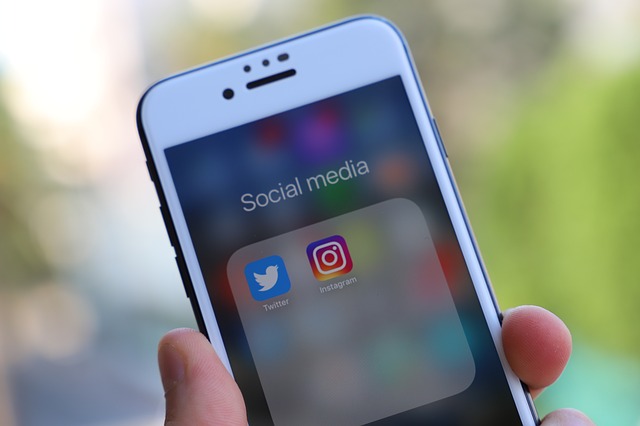
Social media is a constant in our daily lives that impacts our perception of ourselves.
Our perception is our reality, even if that reality is skewed and incorrect, it feels real to us.
Social media gives us an unrealistic, glorified glimpse into the lives of others.
When we compare ourselves socially, professionally and spiritually to these online personas, we run the risk of developing lowered self-esteem and less gratitude for our blessings.
Self-esteem is essentially a person’s evaluation of their own self-worth.
Just as a teacher may give a grade of A or D, we grade ourselves.
If we have low self-worth we are more likely to be guarded with social connections and shy away from opportunities that could help boost positive emotions.
Self-esteem is a grade that impacts our attitude towards ourselves.
We want a balance with self-esteem, not too high and not too low.
Healthy self-esteem is not arrogant or boastful.
As Muslims, we must remember that our worth is measured on a higher scale, one of righteousness and faith.
“And the weighing [of deeds] that Day will be the truth. So those whose scales are heavy – it is they who will be the successful” [Quran 7:8]
Social Comparisons Impacting Self-Esteem
We often use comparisons to evaluate ourselves. In our youth we look to role models for examples of what is good and bad, and for establishing standards.
Often our timelines are full of people traveling, buying expensive cars or taking selfies with the Kaaba in the background.
These comparisons and models are distorted, we are seeing the highlight reel of someone’s life, their idealized online reality.
We are not seeing their mistakes or what they look like without filters.
Social media has become a source for social comparisons equipped with a system that lets us know if our friends love, like, hate or feel sad about us.
Using this as our comparison is unrealistic.
Self-awareness
Honest analysis of ourselves empowers us with a good understanding of our thoughts, beliefs, weaknesses, skills and how we use all of this to interact with our environment.
To strive for personal growth, we must be able to accurately self-analyze.
Low self-esteem goes directly against accurate awareness of self.
Some even compare themselves to their own online personas.
They created an unrealistic portrayal of themselves online so when time comes to meet someone, they feel anxiety as if they cannot live up to their own self.
Low Self-Esteem and Ungratefulness
If we combine lowered self-esteem with ungratefulness we have someone who feels like they are failing at life.
They don’t recognize their blessings and become overly focused on negativity.
It could lead to anxiety and/or depressive behavioral health concerns that can become dangerous or even deadly.
Gratitude to Boost Self-Esteem
Being grateful is a spiritual and emotional benefit that enhances our mood, allows us to take account of our blessings as well as enables us to see hardships as lessons.
We are shown in Quran and Hadith to be grateful for our blessings.
“’If you are grateful, I will surely increase you” [Quran 14:7]
Instead of looking at social media as a spectacle of those above us in success and prosperity, we need to be mindful of our own blessings.
Islam promotes qualities like gratitude, mercy and charitable acts.
If we consciously encourage ourselves to look to those in greater struggles than our own, we will be promoting a grateful perspective which can increase our self-worth inshallah.
Prophet Muhammad (PBUH) said:
“Look at those who are beneath you and do not look at those who are above you, for it is more suitable that you should not consider as less the blessing of Allah.” [Sunan Ibn Majah]
Change Your Perspective, Change Your Reality
I say this constantly and it holds true.
You can think of our perspective like a pair of glasses.
My glasses optimize my vision clarity and depth, yet I put on someone else’s glasses it could create the opposite effect and I fall down the stairs.
If we consciously try to alter which pair of glasses we put on today, we are altering how we view and interact with our environment, this includes social media.
“Indeed, Allah will not change the condition of a people until they change what is in themselves” [Quran 13:11]
While scrolling through our feeds we can remember it Is from Allah (swt) when one is given a blessing such as the ability to travel or a new marriage.
Instead of feeling like we must compare to it, we can make duaa for their continued success and say alhamdulillah for the blessings we have.
“None of you will have faith till he wishes for his (Muslim) brother what he likes for himself.” [al-Bukhari]
Closing Thought
Social media can be beneficial and positive as well as a source of Islamic discussion.
This is if we use it in moderation, ethically and have a positive faith-based perspective when interacting.
Healthy self-esteem and gratefulness are part of having a good quality of life and happy disposition.
This article is from our archive, originally published on an earlier date and highlighted here for its importance.
The post This Is How Social Media Impacts Our Self-Esteem appeared first on About Islam.
source https://aboutislam.net/family-life/self-development/social-media-impacts-self-esteem/


Comments
Post a Comment