Exotic Herbs in Prophetic Hadith

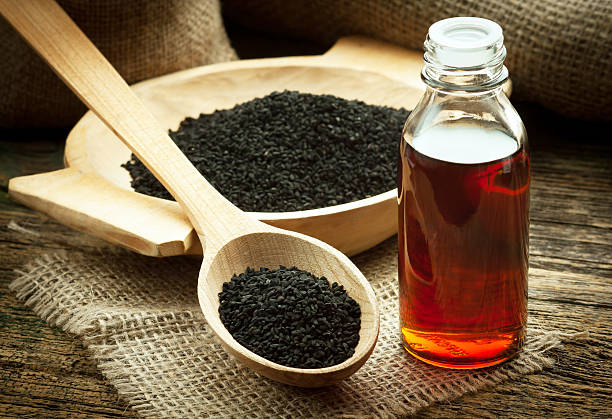
Many herbs have been used historically as “cure-alls” or potent “tonic herbs.” Among these herbs are black seed, fenugreek and aloe vera, three of the Prophet’s (SAW) favorite herbs.

Bukhari reports that the Prophet (PBUH) recommended that we “use black seed regularly because it has a cure for every disease except death.” Sahih Bukhara 7/591

The Food Chemistry magazine found that the Nigella sativa or more colloquially the black seed is rich in protein, carbohydrates, essential fatty acids, vitamins A, B1, B2, C and niacin as well as calcium, potassium and iron. These are the very nutrients that modern science has found that we most lack.

📚 Read Also: Seeking Goodness of Nature

We are encouraged to drink milk for calcium, to take supplements of Essential Fatty Acids (EFA), and to consume niacin pills to lower our cholesterol; though, the black seed can provide many of these same benefits.

It also provides many of the same nutrients that the US Food and Drug Administration (FDA) recommends. They help prevent disease and slow down the aging process.

Dr. Michael Tierra, author of Planetary Herbology, also found black seed to be high in the above nutrients. In addition, he found a remarkable number of sterols, especially beta-sitosterol, which has anti-carcinogenic properties.

The Journal of American Scientists reported that the black seed has a number of useful properties such as antihistamine, antioxidant, antibiotic, antimycotic and broncho-dilating effects.

These findings possibly explain its long history as a lung tonic. Humans have used the Black seed for almost 3,000 years. It clears up blockages and phlegm in the lungs. It cures asthma and asthma attacks. Moreover, it stops runny noses with colds.

Another famous use of black seed is for digestive problems. It dries up soggy stomach, ease colic pain, and expel intestinal worms. It also removes bloating in the intestines caused by eating wheat bread. The warmth of the black seed also increases the flow of all fluids in the body.

Exotic Herbs in Prophetic Hadith

Black seed ointment is also useful for all kinds of ailments where a topical application is indicated including warts, skin allergies, insect bites, baldness and gray hair. In fact, black seed has been classified by many modern scientists as a “tonic herb” or “cure all.”

Dr. Peter Schleicher, a German immunologist, has found that black seed contains the unsaturated fatty acids, Linoleic and Gammalinolen. In fact, Linoleic stabilizes the cell membranes.

Also, the Prostaglandin in black seeds has the effect of inhibiting inflammation. This combination halts immune reactions and the start of many chronic illnesses like eczema, asthma and even cancer.

Click to read more…

The post Exotic Herbs in Prophetic Hadith appeared first on About Islam.


source https://aboutislam.net/muslim-issues/science-muslim-issues/exotic-herbs-prophetic-hadith/

Comments

Popular posts from this blog

List of Times and Places Where Dua is Accepted

A short reminder regarding the recommended times of dua . And I think what you need to know here is that the recommended times of dua or recommended things that can cause your dua to be accepted, can be divided into two sort of large groups: Am I Good Enough to Make Dua for Myself? Situations where your dua is accepted. Times where your dua is accepted So I’m going to very briefly mention them one after the other as much as possible. As for situations where your dua has been accepted: – The person who has been wronged or oppressed . – A person who finds themselves in severe difficulty after a calamity has struck. – The person who is traveling. – Someone who is fasting. – The one who is reciting the Quran or has just recited the Quran – Someone who is performing Hajj or Umrah or jihad. – The one who is making dua for someone in their absence . Because we know that when you make dua for someone in his absence an angel says: “ Ameen and to you”. – A person...

Ghuraba (The Strangers): Nasheed with English Subtitles

Islam began as something strange, and it shall return to being something strange, so give glad tidings the strangers. (Sahih Muslim 145) This famous nasheed has many versions; this one is from Muhammad al-Salman and has the subtitles in English embedded. [We are] strangers and we do not bow the foreheads to anyone besides Allah  […] Transliteration to help in the pronounciation:  Ghurabaa’ wa li ghairillaahi laa nahnil jibaa Aisha Stacey  wrote in an article for Aboutislam.net : “I think that many of you would agree that being Muslim in the 21st century makes you well acquainted with being strange. It might even be a metaphor for random, as in you have been randomly selected. […] many converts to Islam will tell you about feeling as if they were strangers, before finding Islam. They will speak of feeling that they belonged somewhere else that their lives were just slightly off center. They often speak about a vague sense of knowing they were not like everyone else...

Taqwa – Living the Main Purpose of Ramadan

Taqwa is a major purpose for the month of Ramadan. The people of taqwa are those who do the things that they are commanded and avoid the things which Allah has made prohibitive. And evidently, to reach a state of taqwa requires vigilance, it requires patience and sincerity. The verse is pertaining to fasting I found in a single set of verses in chapter 2 starting at verse 183: O you who have believed, decreed upon you is fasting as it was decreed upon those before you that you may become righteous. ( 2:183 ) A Collective Act of Worship Allah is telling us that fasting has been made obligatory and then Allah tells us that just as it was prescribed for those before us. We often get asked this question in Ramadan, “how’s the fast going for us?” And if we gave ourselves a moment to think about it, we see that Allah Most High has made the fast inside the month of Ramadan easy for us because we know that there is a collective spirit to fasting; we know that we’re not alone in this ...