10 Things Every Muslim Can Do to Make a Difference
Doesn’t it seem like there’s just too much that needs to be done and it is beyond me to do anything about this?
There is extreme poverty and hunger all around the world; There are about 1 billion people who are living on less than $1 per day and about 2.8 billion people who live on less then $2 per day.
Have you ever felt like the problems are just too huge to solve? Have you ever blocked it out of your mind because if you really thought about it, you would become depressed? If so, then you’re not alone.
Of course, there are some people who will make one specific issue their focus and they’ll work to help in that direction. For example, someone might make the support of the local Islamic Center his or her cause.
Someone may make it their lifetime objective to share the message of Islam with humanity. Another person may adopt the mission to support and establish Islamic Schools and yet someone else may take on the task of providing relief to war and disaster victims. But most of us don’t have time to do justice to those types of goals like we should.
But the alternative, sitting at home and watching TV is hardly worth our time when there are real people out there who need us, and a cause that we must support.
As Muslims we constantly need to understand the real meaning of submitting our selves to the will of God and practice the essence of humanity taught to us by the one who was sent to us as a mercy to the worlds, our beloved Prophet Muhammad (PBUH) .
So in view of all the variables that affect most of our lives in the modern world, following is a list of ten easy things that every Muslim family can do so that we can contribute to the betterment of our selves, the Muslim community and humanity at large.
Once you go through the list you can add your own things to do to this list.
Sponsor an Orphan
Before anything else, there are hungry children everywhere who have needs right now. There are several reputable programs that offer orphan sponsorship at very low monthly cost. We know that we can afford to do it. Supporting an orphan can make us close to the Prophet (PBUH) in Paradise.
Go to the Mosque at least once a week for prayer
Even if someone can’t go to the local Mosque for the Friday prayers because of their job (or due to the pandemic) then we can at least go for one Maghrib (evening prayer) once a week or for Zuhr (noon prayer) on the weekend.
Whatever time is suitable, we can at least take timeout for this once a week – with our family. This will help us and our family make the Mosque a center for activity and our children will develop ties to the community.
If we don’t like the way the Mosque is operated, we have an opportunity to make it better by getting involved. If someone lives in a remote area that does not have a Mosque, then pray together at home with all the family members.
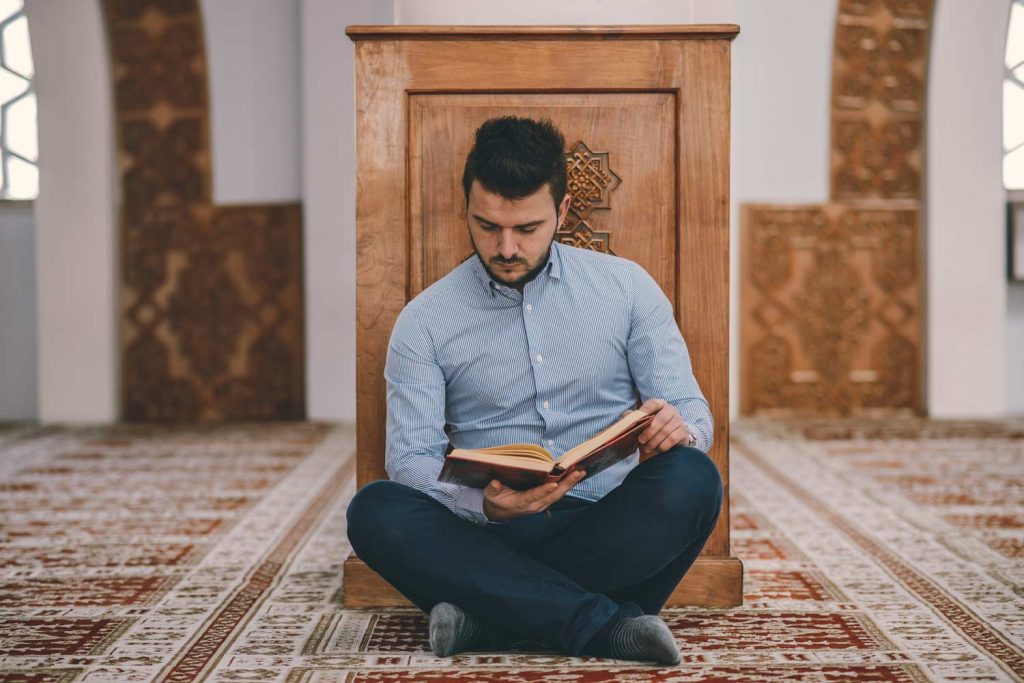
Send your children to an Islamic School
If your children go to public school, and there is no Islamic school nearby, then make sure they either get into some Sunday school program, or, if the local Islamic Center doesn’t run it right, then pool together with some like-minded families and run your own program at somebody’s house every Saturday or Sunday and conduct it the way you think it should be done. This is the minimum requirement for not losing our children to materialism and other social ills.
Buy at least one book, audio or video per month
Have you ever wished that there were better items for you and your family’s pleasure? Unfortunately, there is not enough support for writers and artists.
People who write or produce for the Muslim market have a very difficult time sustaining them selves. That must change if you want to see wonderful products for ourselves and our children. Just buy one product per month. Collectively, this can encourage our creative and talented brothers and sisters to do more.
Become a host family to new Muslims
The convert experience is basically one of isolation and loneliness. You’d be surprised to know that most converts are often ignored by the people in the Islamic Centers. Beyond a few pleasantries and handshakes, they are usually never made to feel welcome or accepted. They are often cut off from their non-Muslim friends and relatives so they are doubly vulnerable.
A new convert should be invited into various people’s home for dinner as often as possible and especially on Islamic holidays. Get together with others and make sure you all put the new convert on your guest list for any sort of gathering.
Keep extra Quran translations and literature handy
You never know when you’ll find someone interested who wants to know more. Besides, our children may only understand English. Encourage the children to read the translation and discuss the Quran with them.
Invite your neighbors to your home for dinner
Most of the time we are so involved with our circle of friends, family and co-workers and we forget the people who are living right next to us. To be good to your neighbor is an important example shown to us by Prophet Muhammad (PBUH). So invite your neighbors to your house and get to know them and let them know you.
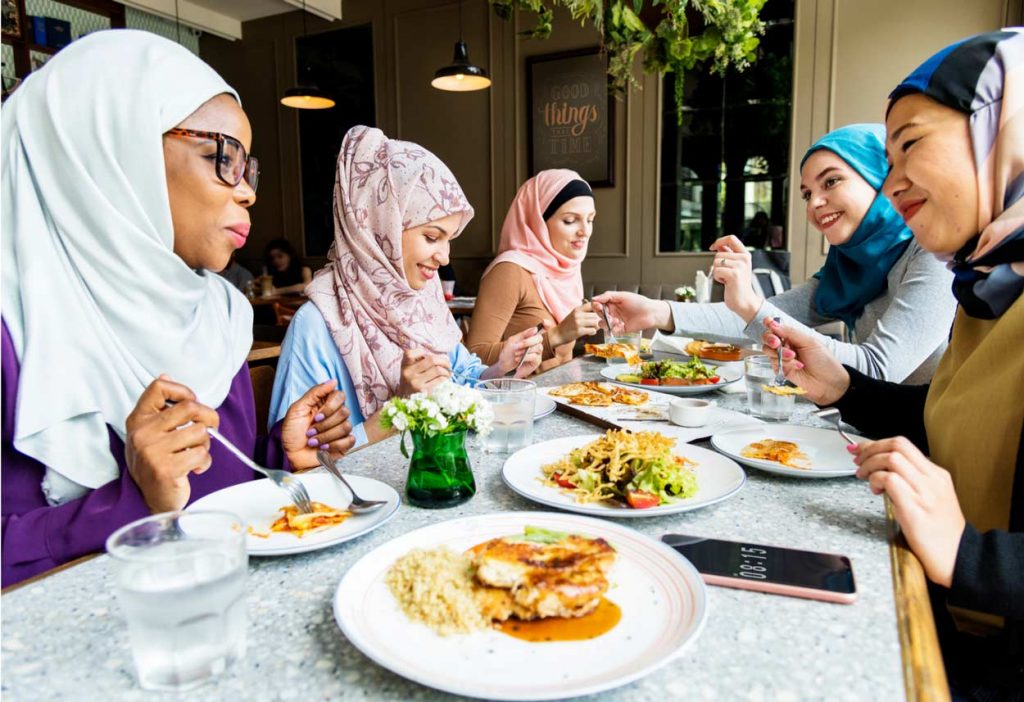
Make a big deal out of the family meal
The concept of a family meal is a dying trend. The dinner table is not only a place of sustenance and family business but also a place for the teaching and passing on of our values. Manners and rules are subtly absorbed over the table. Family mealtime should communicate and sustain ideals that children will draw on throughout their lives.
Establish an Islamic culture in the home
Make sure you and your family have cultural-type items in your home in abundance that are associated with Islam or Islamic culture. Everyone in your home should have prayer beads, prayer rugs, Hijabs, (even if they’re worn only for prayer), gowns, posters, wall plaques, stickers, logo-shirts, Islamic screen-savers on the computer, and so on. You want to establish an identity in your home.
Be a good example
Face it: human beings learn and form opinions primarily through modeling. In fact, we can’t avoid being an example and model to our family, children, friends, co-workers, neighbors and even strangers, whether good or bad. Being a good example, then, is probably our most important job.
This is by no means an exhaustive list. These are just some things that can be done, with minimal trouble and fuss, by each and every Muslim family.
Through these ten points several aspects of Islam are being served and we can feel that we are doing something in an organized fashion to help promote a healthy and constructive way of life, at the same time we can fulfill our responsibility to our Creator. Give it a try and see how easy these things really are.
Republished from Islamcity.org
This article is from our archive, originally published on an earlier date, and now republished for its importance.
The post 10 Things Every Muslim Can Do to Make a Difference appeared first on About Islam.
source https://aboutislam.net/family-life/muslims-4-humanity/10-things-every-muslim-can-make-difference/


Comments
Post a Comment