Best Things to Do in the 10 Best Days of the Year
It is indeed God’s benevolence upon His slaves that, not long after the holy month of Ramadan bids them adieu for a whole year, a similar ten-day period full of blessings, mercy and opportunities for earning great rewards arrives.
This period occurs at the start of the month of Dhul Hijjah, which means, in Arabic, “the one of the hajj”.
God has indicated the greatness of these ten days (and nights) by taking an oath by them in the Quran:
By the dawn; by the ten nights. (89:1-2)
Ibn ‘Abbas, Ibn al-Zubayr, Mujahid and others said that this verse refers to the first ten days of Dhul Hijjah.
Ibn ‘Abbas reported that the Prophet (peace be upon him) said:
There are no days in which righteous deeds are more beloved to Allah than these ten days. (Al-Bukhari)
Joining the Pilgrims in Good Deeds
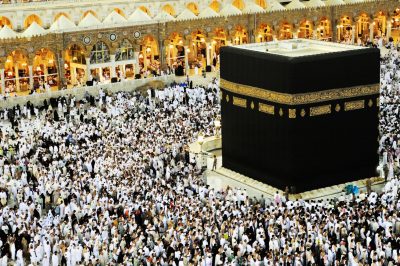
There are special times in the lunar Islamic calendar in which Muslims the world over unite in worship. Dhul Hijjah is the last month of the lunar calendar year. It is the month in which all those Muslims who intend to perform the annual pilgrimage begin to arrive in Makkah.
The rites of hajj include certain restrictions in the state of ihram as well as other rituals of worship which even those Muslims around the world, who are not performing it, can join their pilgrim brothers and sisters in doing, such as not cutting hair and nails, happily sacrificing an animal, and doing extra good deeds such as reciting takbirs (verbal proclamation of the greatness of God).
In this way, the first ten days of Dhul Hijjah become a special; it’s a cherished period of time in which the entire, globally scattered Muslim ummah (nation) unites in worship once again, just as they did during Ramadan.
Another aspect of Dhul Hijjah that is worthy of being pointed out, is the revival of the spirit of unswerving monotheistic belief that was embodied by the actions of Prophet Ibrahim.
Circumambulating the ka’bah in Makkah, praying at the Maqam Ibrahim, walking between mounts Safa and Marwah, stoning the jamarat, sacrificing an animal, and reciting takbirs, all recall the meaningful and legendary events that took place in the life of Prophet Ibrahim and his family (Ismail and Hajar) as they passed test after test that God sent their way, most of which God has commanded us to symbolically replicate during these first ten days of Dhul Hijjah.
There are several ways that Muslims around the world who are not performing hajj can make the most of this precious ten-day at the start of Dhul Hijjah to perform good deeds.
Hajj: Once in a Lifetime Obligation
In order to make them feel included in the spirit of hajj, Prophet Muhammad has encouraged the non-pilgrim Muslims to partake in good deeds where ever they are in the world, in order to promote an air of righteousness that permeates the entire population of Muslims, culminating in the ubiquitous Eid celebration.
Fasting, Especially on the Day of Arafah
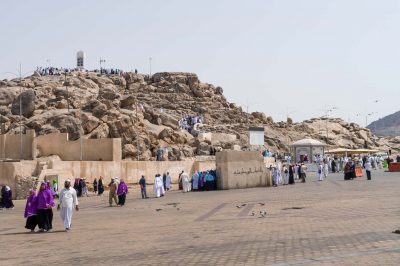
Any good deed that is done during these ten days carries immense rewards.
Fasting on the day in which the pilgrims gather in the plain of Arafah and ask God for forgiveness is a sunnah. Prophet Muhammad used to fast on this date every year. Fasting on the day of Arafah expiates for the sins of the preceding year, as well as the year to come, by God’s Will.
Prophet Muhammad said:
The observance of three days’ fast every month and that of Ramadan every year is equivalent to fasting for the entire year. I seek from Allah that fasting on the day of ‘Arafah may atone for the sins of the preceding and the coming years; and I seek from Allah that fasting on the day of ‘Ashura’ may atone for the sins of the preceding year. (Muslim)
Sacrifice: Reviving Abraham’s Sunnah of Submission to God
Sacrificing an animal on the 10th. of Dhul Hijjah is recommended for all those Muslims who are able to afford the price of a sacrificial animal (or that of a part of a larger animal).
One sacrifice is enough for the whole household where a family resides; but if any of the individual members happily offer their own separate sacrifice, it is better and worthy of more reward:
Al-Tirmidhi narrated that ‘Ata’ ibn Yasar said, “I asked Abu Ayub:
“How was the sacrifice done at the time of the Messenger of Allah?”
He said:
“A man would offer a sheep on behalf of himself and the members of his family, and they would eat some and feed others with some.”
Further, the one who intends to offer a sacrifice, whether man or woman, should refrain from cutting their hair, nails or any part of their skin once the Dhul Hijjah moon is sighted:
Narrated Umm Salamah that the Prophet (peace be upon him) said:
When you see the new moon of Dhu’l-Hijjah, if one of you wants to offer a sacrifice, let him refrain from (cutting) his hair and nails. (An-Nasa’i)
The wisdom behind this prohibition is to inculcate a higher level of taqwa (consciousness of God) in those Muslims who intend to offer a sacrifice on Eid Al Adha.
Dhikr: Takbir, Tahlil and Tahmid
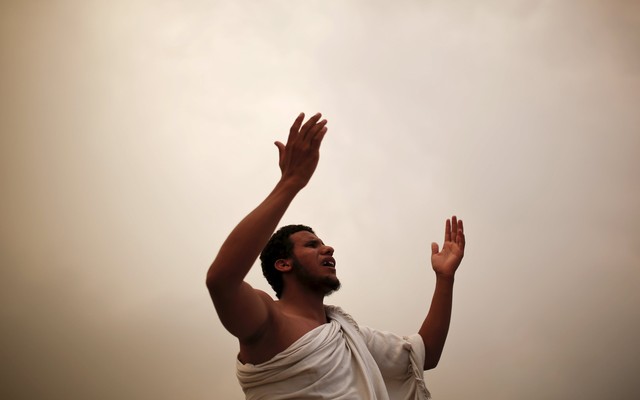
The Prophet and his companions used to recite Allahu Akbar, Subhan Allah and Alhamdulillah loudly and frequently (individually, not in unison) throughout the first ten days and nights of Dhul Hijjah, right up until Eid prayer.
Since these are the best days of the entire year for a Muslim, both pilgrims and those who are not performing hajj, seemingly ‘idle’ moments during them can also be spent in doing a very easy act of worship – dhikr.
Reciting the above recommended verbal proclamations of takbir, tahlil and tahmid will bring great reward and the pleasure of God during these days.
A good way to ensure that one recites these adhkar throughout the day, is to play them on the CD player; or via the Internet on one’s computer at home, in the car, or while working out.
Conclusion: Increase Supererogatory Good Deeds
The ten best days of the year are here. Try to make the intention to spend them in repenting for all the sins you’ve committed in your life; and in doing as many supererogatory good deeds as you can.
Examples of good deeds besides the ones already mentioned above in this article, are:
Reciting the Quran and pondering upon its meanings with the intention of improving one’s actions and increasing one’s faith; discharging zakah and sadaqah; feeding others; praying the late night prayer in the last third of the night; praying the sunnah prayers after sunrise; greeting or meeting close kin and other relatives; forgiving those who have wronged you, and relinquishing all activities and hobbies that waste time or increase the love of the world.
(From Discovering Islam’s archive)
The post Best Things to Do in the 10 Best Days of the Year appeared first on About Islam.
source https://aboutislam.net/reading-islam/living-islam/best-things-to-do-in-the-10-best-days-of-the-year/


Comments
Post a Comment