How Does Hijab Live In Today’s Society?
“Hijab is a Crown of Glory For Women”
This metaphor is not explicitly mentioned in the Qur’an, but it is a metaphor that I often hear from the Muslim community in my country (Indonesia). In my opinion, that is the simplest way to describe hijab, especially to those who don’t know well about Islam.
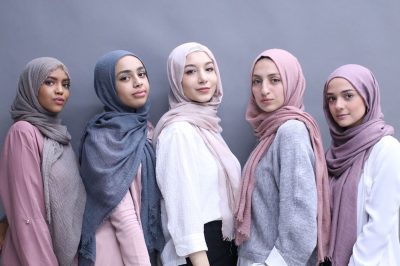
Islam Treats Women Specially
Talking about women is actually talking about a great civilization. Women have a noble position. They play an important role in forming a generation. The existence of hijab shows that Islam is concerned about this matter, where hijab holds the function of protection.
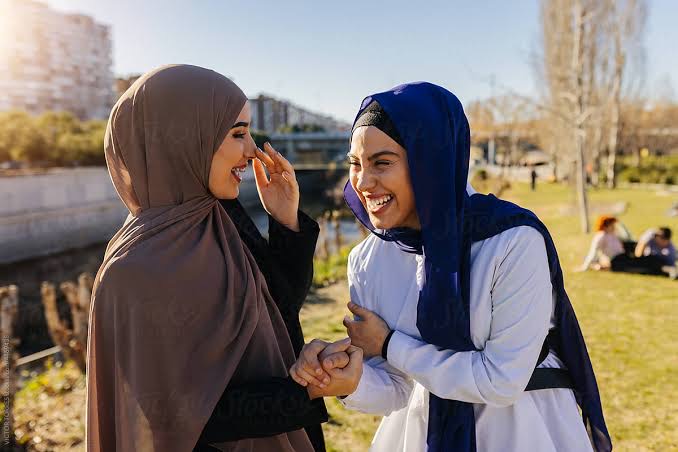
However, I watched several comments about hijab such as; “hijab hinders women’s freedom”, “hijab is not fashionable” or “hijabis are conservative people who are closed-minded”.
That is understandable, because in this day and age many people hold on to liberal ideology. It shows that people start with different understandings. But, I believe that some of them are trying to show their concern for Hijabis.
Hijab may be irrelevant for some people. Precisely, as a hijabi, I think the existence of
hijab is actually relevant to saving women from the issues that surround them.
I think the relevance is not like a distortion, where when the hijab does not meet the standards in society nowadays, then hijabis do not need to wear it. As a Muslim, my point of view works based on my beliefs. It’s like the main lens for me in seeing things and also be a hold on doing or deciding something.
The belief is whole and it cannot be changed. It can be said that I believe the values in it are true. So, how to see its relevance is based on how the commandments (in this case hijab) are directed to deal with issues in society rather than how society deals with hijab.
Hijab is a Form of Protection
It works like a shield. There have been many stories discovered where women got violence, either physically or psychologically. This is happening more and more nowadays. In this case, hijab prevents women from receiving inappropriate gazes.
It is because hijab covers almost all parts of a woman’s body, so it can hinder them from certain types of people who see women in a lustful way. This will keep women from any kind of harassment to any extent.
Hijab Helps Women Get Inner Peace
Nowadays, we know how bluntly women are required to be perfect. Insecurity is the biggest thing that happens to most young women. For them, there must be a thought that they will be considered worthy if they look a certain way. Actually, it can bring a lot of burdens that can end up hurting them.
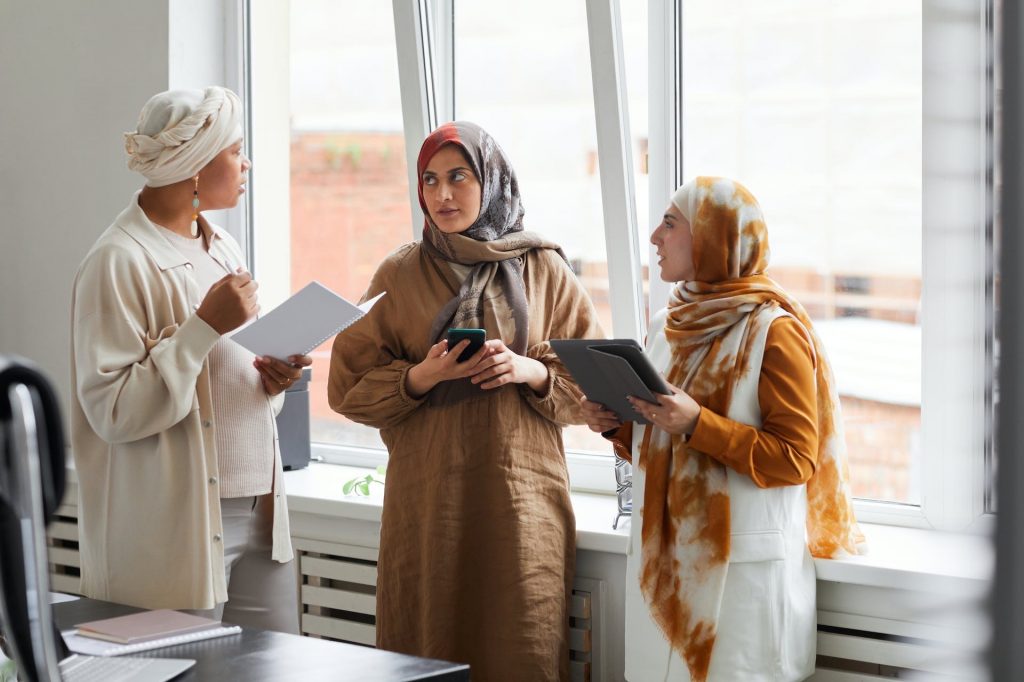
In some fields, it is indeed necessary to feel insecure in order to have awareness of self- development.
However, in this case, hijab comes not to cover up the feeling of the shame of a young woman who feels insecure with their body but to teach her the idea that; “you don’t need to feel insecure“. Hijab reminds women in all its glory of “just the way they are”. They are made with glory, so, they are perfect already.
Hijab, an Embodiment of Love, Not Oppression
This is the first and foremost reason for Hijabis. The hijab comes as a form of love from the creator for his creatures, as mentioned in surah al-Ahzab verse 59. For a woman who wears it, it becomes embodiment of love as a creature to her Rabb, which in Islam is known as Taqwa.
For the majority of Muslim women who wear hijab, the decision to wear hijab is made
consciously based on their willingness. So for them, there is no form of oppression at all.
As a hijabi, I want to tell the world that “hijabis are girls too, hijabis are women too”. “Hijab is not just about fashion but an obligation.” So, “Please let those girls wear their hijab peacefully!”
The post How Does Hijab Live In Today’s Society? appeared first on About Islam.
source https://aboutislam.net/blog/how-does-the-hijab-live-in-todays-society/


Comments
Post a Comment